Judaism & Culture

The Jewish Way in Death and Mourning: Preparing the Body

How does Judaism approach death, bereavement, and the mourning process?

After death has been established, a call is put in to the chevra kadisha to come and collect the body to prepare it for the funeral and burial. The chevra kadisha is the Jewish burial society, usually consisting of volunteers, who prepare the deceased for proper Jewish burial. Their job is to ensure that the body of the deceased is shown proper respect, ritually cleansed, and shrouded. Men prepare men, and women prepare women. From death until burial, it is traditional to have a “guard” stay with the deceased at all times. The guard generally recites the book of Psalms during this time.

Many local chevra kadishas in urban areas are affiliated with local synagogues and they often own their own burial plots in various local cemeteries. Some Jews pay an annual token membership fee to the chevra kadisha of their choice, so that when the time comes, the society will not only attend to the body of the deceased as befits Jewish law, but will also ensure burial in a plot that it controls at an appropriate nearby Jewish cemetery.

Preparing the Body: The Tahara

The tahara, the washing and preparation of the body, generally consists of the following steps:

  1. The body is uncovered (a dead body is covered with a sheet prior to the taharah).
  2. The body is washed carefully. Any bleeding is stopped and all blood and blood-stained materials are buried along with the deceased. The body is thoroughly cleaned of dirt, bodily fluids, and anything else that may be on the skin. All jewelry is removed. The beard is not shaved.
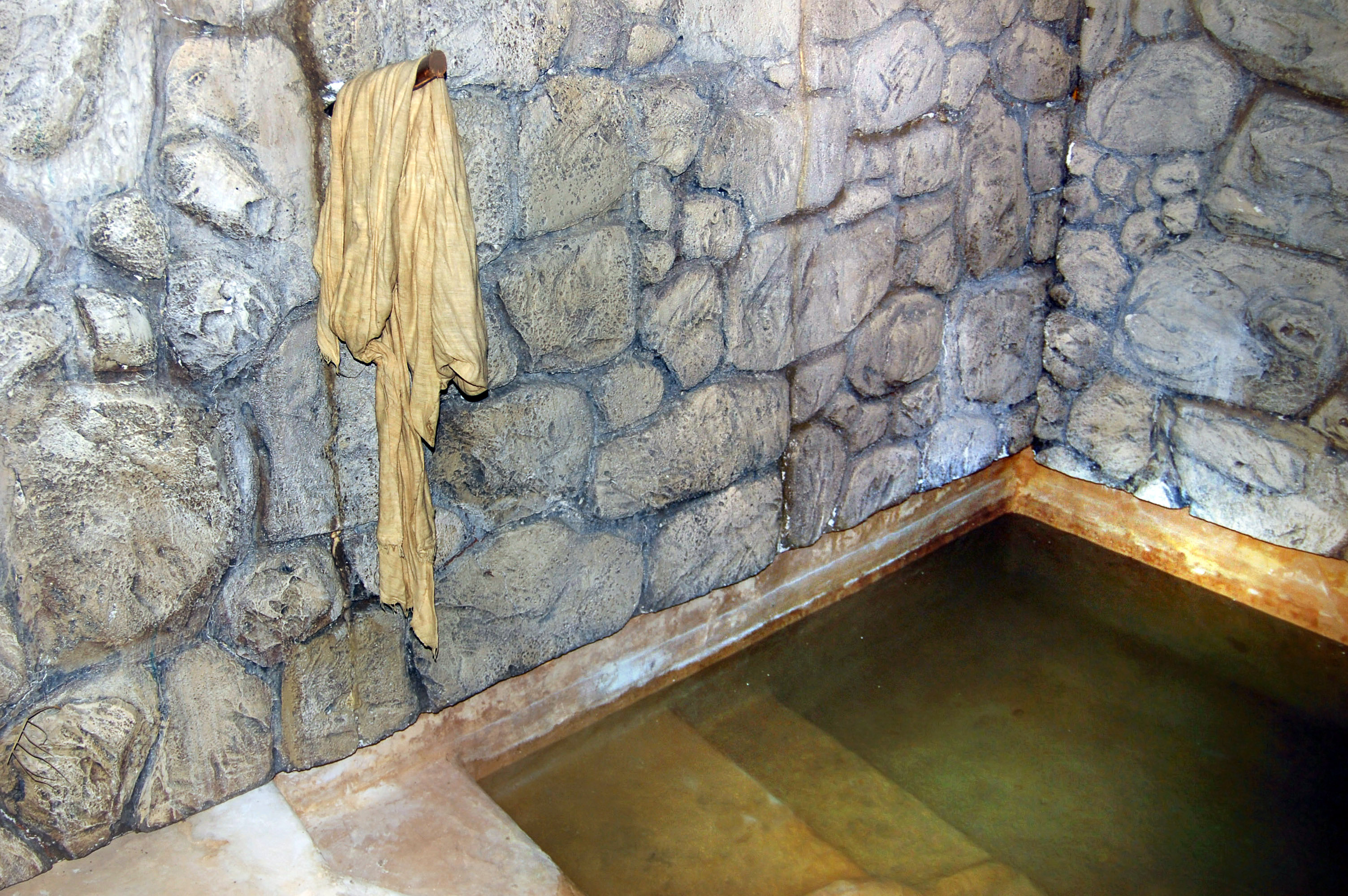
  3. The body is purified with water, either by immersion in a mikva or by pouring a continuous stream of “9 kavim” (usually three buckets of water) in a prescribed manner.
  4. The body is dried (according to most customs).
  5. The body is dressed in traditional burial shrouds. A sash is wrapped around the clothing and tied in the form of the Hebrew letter shin, representing one of the names of God.
  6. The casket (if there is one) is prepared by removing any linings or other embellishments. A winding sheet is laid into the casket.
  7. If the deceased wore a prayer shawl, a tallit, during their life, it is laid in the casket for wrapping the body once it is placed inside. One of the corner fringes (tzitzit) is removed from the shawl to symbolize that it will never again be used for prayer and that the deceased is exempt from observing the mitzvot (commandments) of the Torah.
  8. The body is lifted into the casket and wrapped in the prayer shawl and sheet.
  9. Earth from Israel (if available), is placed over various parts of the body and sprinkled in the casket.
  10. The casket is closed.

Prayers, Psalms, and Bible Verses

As the tahara is being performed, prayers and readings from Torah, Psalms, Song of Songs, Isaiah, Ezekiel and Zechariah are recited. After closing the casket, the chevra kadisha members ask forgiveness of the deceased for any inadvertent lack of honor shown to the deceased in the preparation of the body for burial.

Caskets in Jewish Practice

There is generally no viewing of the body, and Judaism doesn’t allow for open casket funerals. In Israel caskets are not used at all, with the exception of military and state funerals. Instead, the body is carried to the grave wrapped in a tallit and placed directly in the earth. In the Diaspora, in general, a casket is only used if required by local law. In the United States, a casket is always required.

By: Rabbi Ari Enkin

Share
Published by
Shana Conrad
Tags: Mourning in Judaism

Recent Posts

  • Middle East

Trump mulling firing ambassador who said Israel is ‘occupying’ the Golan – report

Trump administration reportedly deliberating on whether to replace Tom Barrack as ambassador to Turkey and…

1 minute ago
  • Israel News

Freed hostage Eliya Cohen releases memoir

The book, written in alternating voices, traces their journey from the festival grounds to the…

15 minutes ago
  • Analysis & Opinion
  • Source-MEF

In Syria and Lebanon, containment is over and forward deterrence has begun

The Middle East has always rewarded clarity and proven capability more than restraint or appeals…

33 minutes ago
  • Israel News

Arab Knesset members push for EU to intervene in upcoming Israeli election

Israeli Arab party leaders meet with European Union representatives, request EU to provide election monitoring…

41 minutes ago
  • Videos

WATCH: Danny Danon reaffirms Israel’s ‘historical and Biblical’ right to Judea and Samaria

Israeli Ambassador to the United Nations Danny Danon criticized the term 'occupied lands' regarding Judea…

58 minutes ago
  • Middle East

Iran says it has two-year plan to defy Trump’s economic offensive

Tehran says American plan to strangle Iran economically will fail, claiming that a two-year plan…

1 hour ago