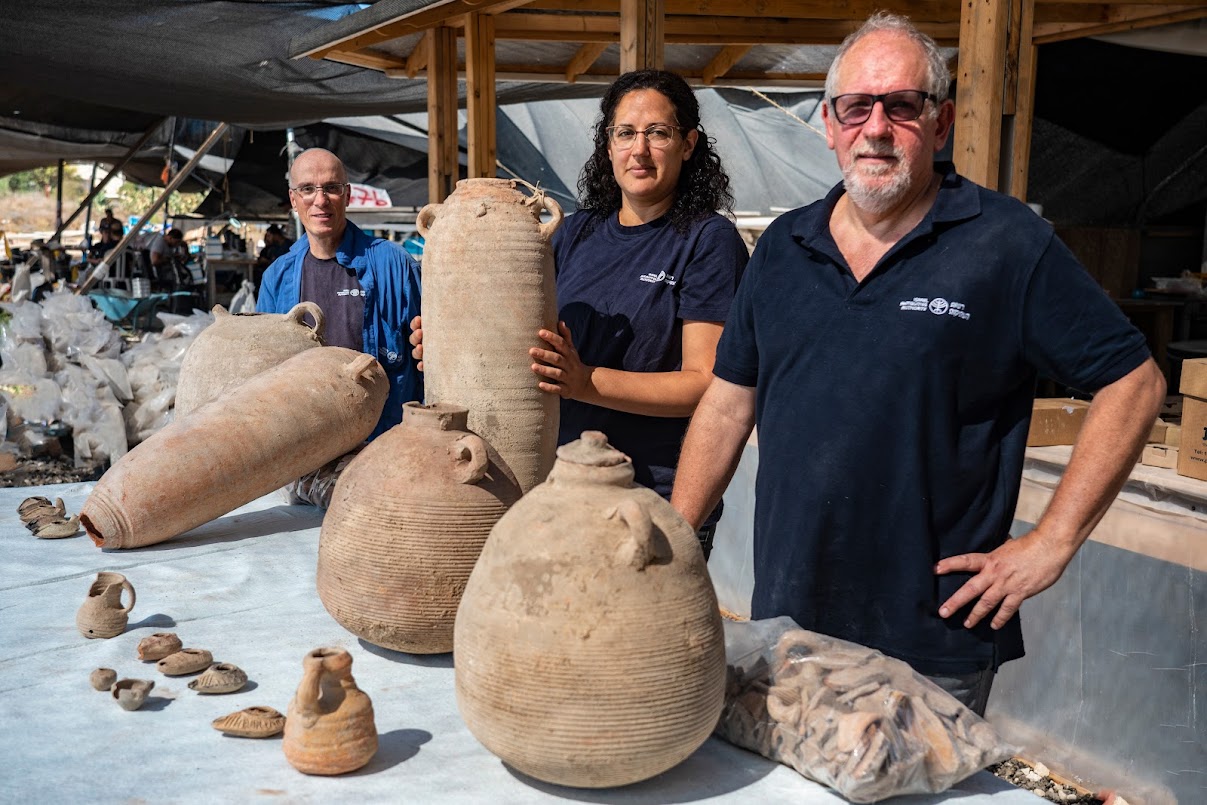
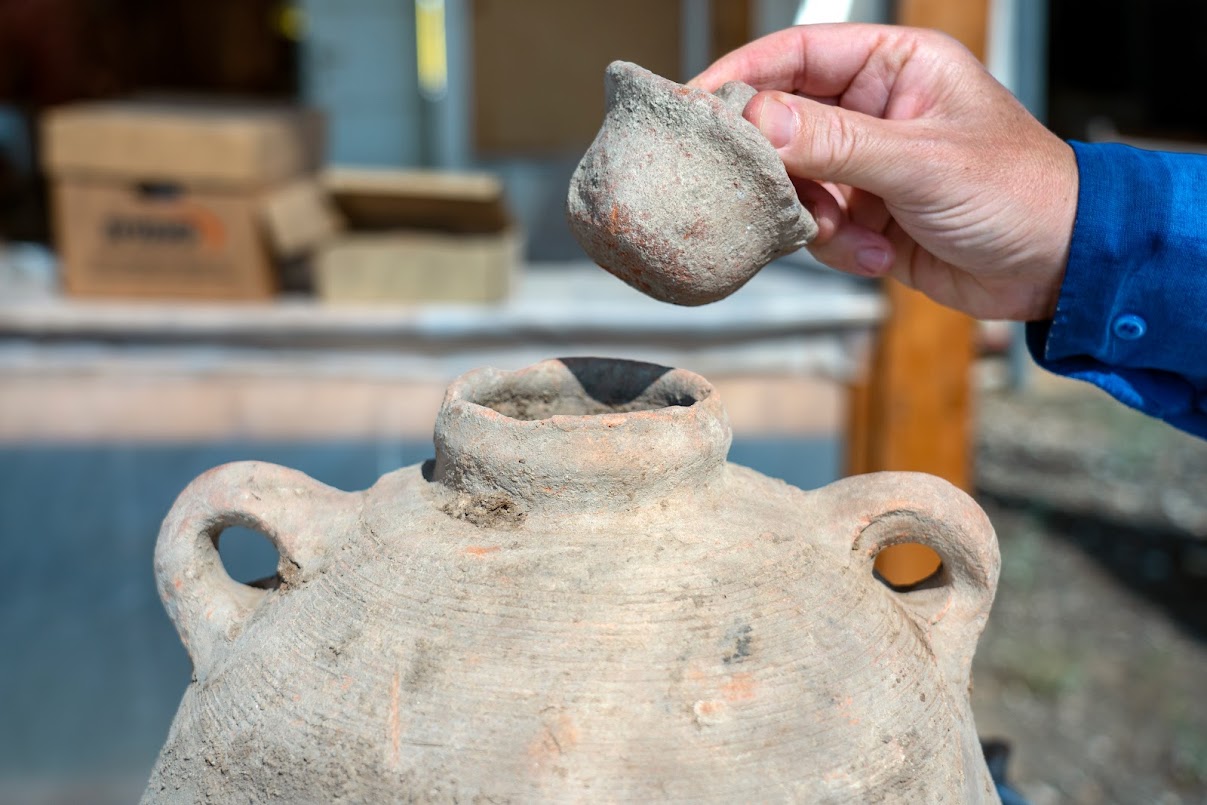
A pair of wineries for producing wine from the Byzantine period. Photo: Yaniv Berman, Israel Antiquities Authority
The complex was capable of producing and selling more than two million liters of premium wine a year.
By Donna Rachel Edmunds, World Israel News
A huge 1,500 year-old industrial winemaking complex has been uncovered on the outskirts of the town of Yavne. The find, the world’s largest Byzantine wine manufacturing site to date, has been dubbed an “archaeological sensation” by the Israel Antiquities Authority, which is managing the site.
The archaeological dig uncovering the site has been underway for the last two years, prompted initially by the Israel Land Authority’s intention to expand Yavne. What the archaeologists found has exceeded all expectations: five massive open wine presses of 225 square meters each, huge octagonal vats to collect the juice from the grapes crushed underfoot, warehouses for aging and marketing the wine, and even a pottery with kilns for firing the clay amphorae used to store the wine.
The site was also carefully laid out to facilitate movement around the site by the workers. In all, the massive commercial operation was capable of producing some two million liters of wine a year.
“Gaza and Ashkelon Wine was considered a quality wine brand of the ancient world, whose reputation has spread far and wide, a bit like Jaffa oranges denote their origin and quality today from Israel”, excavation directors Dr. Elie Haddad, Liat Nadav-Ziv and Dr. Jon Seligman explained.
Excavation directors, from right to left: Dr. Jon Seligman, Liat Nadav-Ziv and Dr. Elie Hadad. Photo: Yaniv Berman, Israel Antiquities Authority
“Everyone knew that this was a product from the Holy Land, and everyone wanted more and more of this wine. The wine received its name as it was marketed through the ports of Gaza and Ashkelon.”
They added: “So far, other sites where wine was produced are known from the southern coastal plain, but now, we seem to have found the main production center of this prestigious wine. From here, commercial quantities were transported to the ports, and then throughout the Mediterranean basin”.
So well-known was the region for its exceptional wine that the amphorae – elongated jars which taper at the bottom – were known as Gaza jars. Thousands of pot fragments have been found at the site, but the dig also uncovered intact examples.
Wine was a common drink in ancient times for both adults and children alike, often mixed in with water, partly as water was not always sterile, and also because it improved the taste. It was also drunk as an alternative to water. Consequently, wine production could be a lucrative trade. The wealth of the wine merchants at the Yavne complex is evident in decorative niches shaped like conches adorning the wine presses.
Furthermore, the excavation revealed an older Persian winepress, dating back some 2,300 years. “In the Mishna it is said that after the destruction of Jerusalem, the Jewish leadership migrated to Yavne, and that the sages of Yavne lived in a vineyard and studied Torah. The excavation shows a continuum of existence of the wine industry at the site over many centuries of years”, the archaeologists commented.
The find has been welcomed by the authorities as an asset to both the city and the Israeli people. The Israel Land Authority has pledged 200 million shekels to help the Israel Antiquities Authority to preserve the site for future generations.
Mayor of Yavne, Zvi Gov-Ari said: “The impressive findings strengthen the recognition of the importance of the city of Yavne and its glorious past throughout history”. We have decided that Tel Yavne will be preserved and will be upgraded to become a focal point for tourism and education in the future. The development plan includes a bridge over the site that will allow the finds to continue to exist. This type of activity, in cooperation with the Israel Antiquities Authority, has not been done in other projects in the country, and this is an opportunity to thank all parties for their cooperation.”
Although the site will be developed for public access, the Israel Antiquities Authority, the Israel Land Authority and the Yavne Municipality have extended an invitation to the public to tour site before it is covered to protect it from winter weather. The hour-long tour will take place on Friday, October 15. Participation is by registration only.
Israeli defense chief issues a warning to Iran, threatening to hit the country's energy sector…
Israel's foreign minister denies Gazans are being forced to migrate abroad, as data shows fewer…
Rom Braslavski, a former hostage held by Hamas for two years in Gaza, joined an…
Deputy leader of Britain's Reform Party denounces PM Andy Burnham's trade ban with Jewish towns…
The average age of volunteers stands at 26.8, with the oldest active volunteer being 92…
Beyond Turkey’s borders, the Diyanet maintains a broad international network of mosques, religious institutions, and…